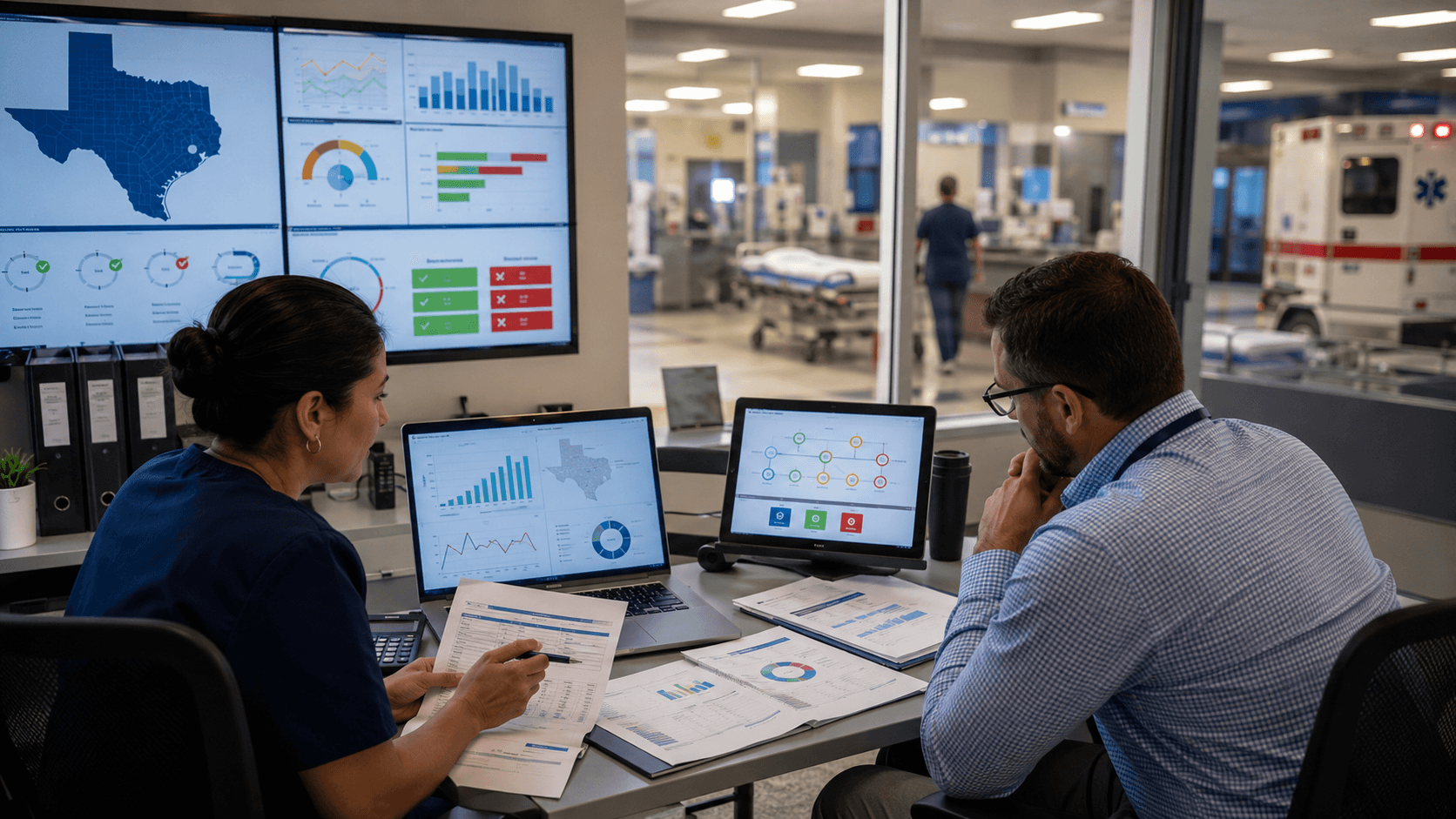
How to structure a financial model for a freestanding emergency room: revenue assumptions, staffing costs, payer mix projections, break-even analysis, and the variables that drive investor returns in Texas.
A financial model is not a formality — it is the foundation of every sound freestanding ER investment and operational decision. Without a rigorous, market-calibrated financial model, investors and operators are exposed to capital risk they cannot see, staffing costs they cannot anticipate, and payer mix dynamics that will determine whether the investment generates a return or destroys capital.
This guide sets out the structure and key components of a credible freestanding ER financial model for Texas markets. It is written for investors evaluating a new ER investment, operators preparing for a lender or equity partner presentation, and healthcare executives assessing expansion feasibility.
Revenue in a freestanding ER model is driven by three primary variables: patient volume, payer mix, and average revenue per visit by payer type. Getting all three right — and understanding how they interact — is the central challenge of ER financial modelling.
Patient volume ramp:
A new freestanding ER does not open at full capacity. Patient volume builds over time as community awareness grows, physician referral relationships develop, and online reputation accumulates. A realistic patient volume ramp for a new facility in a DFW submarket might look like:
The ramp profile depends heavily on marketing investment. Facilities that underinvest in marketing in months 1–12 typically see a materially slower ramp — extending the break-even timeline and increasing total capital at risk.
Payer mix:
Payer mix in a DFW submarket varies by location. High-income, corporate-employment-dense submarkets (North Irving, Frisco, Southlake) typically generate 60–70% commercial payer mix. More mixed-income areas may generate 45–55% commercial. Medicaid and self-pay proportions vary significantly with catchment area demographics.
Revenue per visit by payer type:
The major cost categories for a freestanding ER in Texas, structured for financial modelling purposes:
Break-even analysis determines the patient visit volume at which total revenue equals total operating cost. For a typical 4-bay DFW freestanding ER with a 60% commercial payer mix and standard DFW cost structure, break-even typically falls in the range of 18 to 25 patient visits per day.
At a realistic ramp pace with appropriate marketing investment, this break-even visit volume is typically reached between months 18 and 30 from opening. Facilities with higher marketing investment in months 1–12 tend to reach break-even 4–8 months earlier — a significant capital efficiency advantage.
Focus Your Finance builds three-scenario financial models — conservative, base, and optimistic — to give investors a clear picture of the capital at risk and the conditions required to achieve target returns.
In base-case scenarios for well-located DFW FSERs with appropriate marketing and operational support, 5-year cumulative returns on invested capital of 1.5x to 2.5x are achievable. Operating EBITDA margins for mature facilities typically range from 15% to 30% — with the upper end of this range reserved for facilities with strong commercial payer mix and efficient physician staffing models.
Focus Your Finance prepares investor-grade financial models for ER investment presentations, lender packages, and internal board approvals. Contact Focus to discuss your specific investment scenario.
For a wider view of the investment landscape, see our complete Texas freestanding ER investor guide. To engage Focus Your Finance directly, visit our financial services division or explore the Focus investor support programme.
Editorial note: This content is produced and reviewed by healthcare business specialists at Focus. It is intended for informational purposes and does not constitute legal, medical, or financial advice.
About the Author
Focus Your FinanceDivision of Focus
A specialist division of Focus providing expert services to freestanding ER operators and healthcare businesses across Texas. Learn about our divisions →
Speak with the Focus team about ER growth, investment readiness, and healthcare business support in Texas.